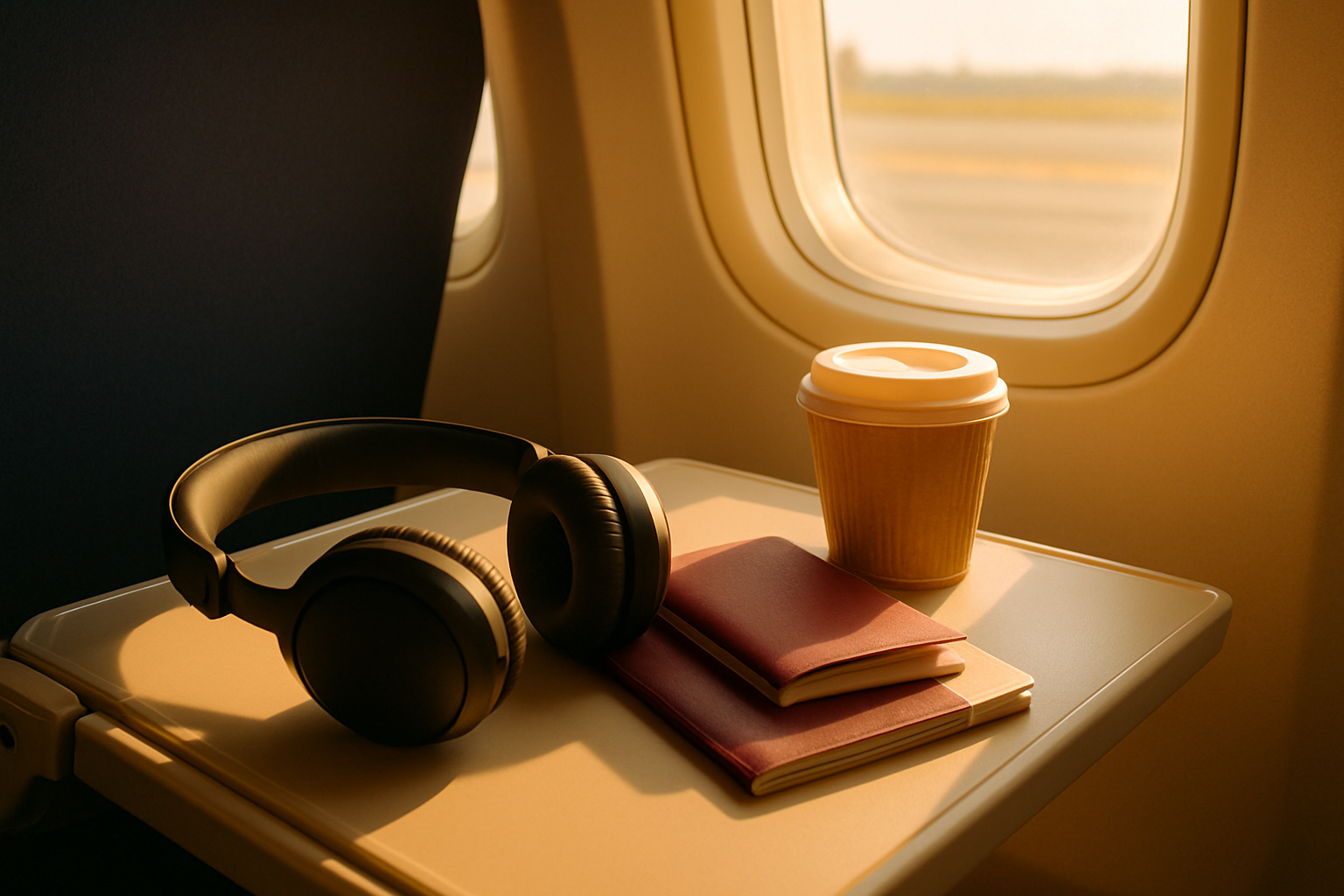
Short answer: both headphones will get you through a noisy economy cabin better than buds, but they suit different jobs. Pick the Sony if you want lighter weight, a gentler clamp and a design that tucks into carry-on space. Pick the AirPods Max if you prioritise a firm seal and robust mic performance for calls and you don't mind the extra bulk.
How these two differ in plain terms
One set is designed around a compact, foldable travel life and long wearing comfort; the other around a premium materials package and a deliberately substantial feel. Both use active noise cancellation, but they approach fit, earpad materials and weight differently. On a plane those small differences decide whether you enjoy a six-hour sector or spend the last hour wishing you'd bought cheaper earplugs.
Noise cancellation in a real economy cabin
Noise cancellation works by using microphones to sample external sound and then creating an opposing signal. That theory is the same for both headphones. The practical result depends on the seal between the cups and your head, how the headphones handle low-frequency engine rumble, and how they deal with the mid-frequency scrabble of air-conditioning, announcements and nearby conversations.
If most of your annoyance is deep, steady engine noise and air-conditioning, a good seal and stable active cancellation give you the biggest payoff. If you are mostly bothered by intermittent sounds - a trolley, a shout, a child - no set of headphones makes them vanish, but some models handle transients more smoothly and feel less like the cabin is being opened and closed around you.
What to expect practically: both headphones will lower the overall volume you need for films and music, so you are less likely to disturb other passengers and less likely to miss announcements. If you sit above the wing, where the engine noise is most persistent, tight low-frequency performance helps more than slightly better midrange silence. If you sit towards the rear or at a window, where airflow and intermittent noise dominate, responsiveness and how the cancellation recovers after a sudden noise become more important.
Fit in economy seats and how that actually matters
There are two practical fit questions on economy flights: how the headphones sit while you are upright and how they behave when you recline. Headroom is limited: the seatback, headrest and the person in front all constrain how you can wear and store your headphones.
Think about the headset when the seat reclines. If the clamping force is high or the cups are very large, you will feel them press into the headrest or burger the space between you and the tray table when you lean forward. Smaller, softer cups tolerate odd angles better. Also consider how the headphones pack into your carry-on. A design that collapses or comes with a slim case slips into an overhead bin or under-seat bag without snagging other items.
Seatmate proximity matters for head-turning. If you need to glance sideways while listening to calls or content, a heavy set will tilt. A lighter set tracks movement with less readjustment; you do not spend five minutes per leg re-seating them. For business travellers who use their headphones through multiple sectors in a day, that difference compounds into noticeable fatigue.
Heat, comfort and multi-leg itineraries
On short hops, comfort is about the initial feel. On multi-leg days, comfort is about how the pads breathe and whether pressure builds behind your ears. The material of the earpads and the ventilation built into the cups strongly influence heat. Leather-style pads keep sound well but can trap warm air and make your ears damp after a few hours; more breathable fabrics ease long stints but trade a little acoustic isolation.
Clamping force matters for two reasons. Strong clamping helps the seal, so noise cancellation and bass response improve. It also increases pressure over time. If you often fly two or three sectors in a day, favour a set that combines a secure seal with a forgiving headband and soft pads. If your routine is one long-haul and then a day of meetings, the initial fit and how the pads age with sweat will be most noticeable.
Practical ways to reduce heat and fatigue on long travel days:
- Rotate the headphones off every couple of hours during boarding or when cabin noise spikes, to let skin breathe and prevent moisture buildup.
- Carry a thin microfibre cloth to blot sweat; cleaning pads between sectors prevents odour and reduces friction.
- If you travel budget-friendly and wake up early between sectors, store the headphones in a breathable pouch rather than a sealed hard case to avoid trapping moisture.
Battery life for movies, calls and sleep: a realistic approach
Manufacturer battery figures are measured in standardised lab conditions and do not match in-flight use. Active noise cancellation, higher volume, Bluetooth codecs and using the microphone for calls all increase power draw. Playing video is more demanding than background music because you use higher sustained volume and, in some cases, lower latency modes that consume more power.
How to plan battery for multi-leg travel
Do not rely on a single number. Use this sequence to estimate whether you will run flat on a travel day.
- Check the manufacturer battery rating on the product support page. Treat that as a best-case reference.
- Estimate your actual use: hours of video, hours of calls, hours of standby with ANC on. Be honest about watching an entire film at 100 percent volume; that is the tough case.
- Assume that real-world use will reduce the rated figure. If you must be certain, plan to recharge at every airport where you have time. Carry a small universal charging cable and any adapters the headphones require.
- Keep power as a safety margin. If the headphones support quick charging, a short top-up after boarding or during a connection can be decisive.
Worked example you can map onto your own itinerary: say you have an early-morning regional hop, a three-hour international sector, and an evening domestic connection. Calculate how much active listening you will do on each leg plus call time in lounges. If you plan on watching two films and taking a laptop call on the way, factor in at least one recharge opportunity. If you cannot charge during the trip, aim to reserve battery by lowering volume, switching off spatial or high-performance modes, and using wired mode if available for the final leg.
Calls, microphones and movie latency in the plane environment
Business travellers use headphones for video, conference calls and occasional sleep. Each use exposes a different weak point. For calls the microphone and how headphones reject cabin noise while transmitting your voice matter more than raw ANC. For films latency and codec behaviour determine whether lip-sync problems frustrate you. For sleep, weight and how the cups press when you lean right or left decide whether the headphones are a help or a hindrance.
Practical differences to weigh: microphone arrays built into some premium closed-back headphones are tuned for telephone-style voice pickup and to suppress nearby noise. That makes them more suitable for calls in crowded airport lounges or on planes where a seatmate's voice bleeds into the microphone. If you rely on voice clarity for video calls, test handshake and use a quiet corner of the lounge before boarding.
Latency is a real issue when you want to watch in-flight entertainment from your own device. Some headphones offer low-latency modes or wired connections that reduce the lag; wired mode is the surest way to eliminate latency, and it also conserves battery.
What can go wrong and how to handle it
Several things commonly go wrong on flights: batteries die, headbands get bent in overhead bins, software updates start at the worst possible moment, and you can be separated from your kit at security or during a transfer. Prepare for those reasonably likely mishaps.
- Battery dead mid-flight: always carry a cable that fits the headphones. If a wired mode exists, use it for the final leg.
- Broken headband or snapped hinge: many premium sets have a limited warranty but repairs can take time. Keep receipts and serial numbers and, if the trip is critical, bring an inexpensive spare pair of earbuds as backup.
- Software updates: turn off automatic firmware updates before the trip. An unexpected update can load in a lounge and temporarily disable the headphones.
- Lost or left behind: label the case and consider registering the device with the manufacturer's lost-and-found procedures where available.
If you want cover for loss or damage during travel, check your policy details and make arrangements ahead of a trip; this site recommends reading the policy wording and, if needed, arranging cover through an appropriate anchor phrase. That gives you certainty about what is replaceable and what is not.
Practical checklist for using premium headphones on economy flights
- Charge fully and pack the charging cable in your hand luggage, not checked luggage.
- Disable automatic updates and confirm the firmware version before departure.
- Pack a slim protective case or pouch to prevent crushed cups in overhead bins.
- Carry a small microfiber cloth and an alcohol wipe for cleaning pads between sectors.
- Bring a spare pair of simple buds for calls or if weight becomes unbearable mid-trip.
- Test wired mode at home so you can plug into seat jacks without fiddling while boarding.
How to choose depending on seat class, noise profile and priorities
This is the pragmatic bit: which one should you pick for economy? The answer depends on three things: where you sit on the plane, how you normally listen and how much you value weight versus isolation.
If you sit over the wing or mid-cabin where steady engine hum is constant and you mostly want to watch films at low to moderate volume, choose the set that gives the best low-frequency isolation with the least weight. For many travellers that means prioritising a model that seals well without clamping so hard that you lose comfort after two sectors.
If you sit at the back, where turbulence, airflow and intermittent cabin noise dominate, a set that reacts quickly to transients and maintains clarity for voices will feel less jarring. If you often need to take calls in the seat or in busy lounges, favour the model with the stronger mic array and clearer voice transmission.
If your priority is minimal fuss-carry, store, forget-pick the lighter, more packable option. If your priority is a premium feel and the firmest possible seal for noisy flights, accept the extra bulk and pick the heavier, more conspicuous option.
Final verdict for a business traveller in economy
If your day is two to four short flights with meetings in between and you carry a suit and laptop, go for the lighter, more travel-friendly set. It will pack without complaint, clamp less aggressively and reduce the neck fatigue that builds over a long workday. It also tends to be less conspicuous when you move through airports.
If you spend long hours on single sectors where mic quality for calls and a very robust seal are mission-critical, accept the extra weight and choose the more premium-feeling option. The firm seal helps conference-call clarity and the materials speak a little more loudly in meetings when you take off the headset at the gate.
Either way, plan battery top-ups, bring a wired option or spare buds and test the mic in a quiet lounge before any important call. A small amount of preparation prevents a lot of mid-flight improvisation.
Frequently asked questions
Which headphones are quieter for engine noise?
Both models reduce engine rumble, but the quieter result depends on the fit on your head and the condition of the earpads. A well-sealed, well-fitted cup will always perform better than a looser fit from a more elaborate design.
Will either pair be comfortable for sleeping on an economy seat?
Sleeping upright in economy is always a compromise. Lighter, softer-cupped headphones are easier for leaning and short naps; heavier, firmer-cupped models are more intrusive. If sleeping is a priority, also carry a simple travel pillow or inflatable wedge to support your head.
Can I use wired mode to save battery and avoid latency?
Yes. Wired mode removes Bluetooth latency and conserves battery. Check whether your headphones support an analogue cable for in-flight systems and test the connection with your device beforehand.
What should I do if my headphones run out of battery mid-flight?
If you can, switch to wired mode. If not, lower the volume on any in-flight audio to reduce disturbance and use earplugs or sleep masks as a temporary measure. Recharge as soon as you have a chance at the next gate.
Are these headphones worth the extra weight in economy?
If you value noise reduction for focused work or rest, the trade-off is often worth it. If you prefer minimal carry and move quickly between meetings, a lighter option or good in-ear buds may serve better. Match the choice to how you travel, not to the headline features.