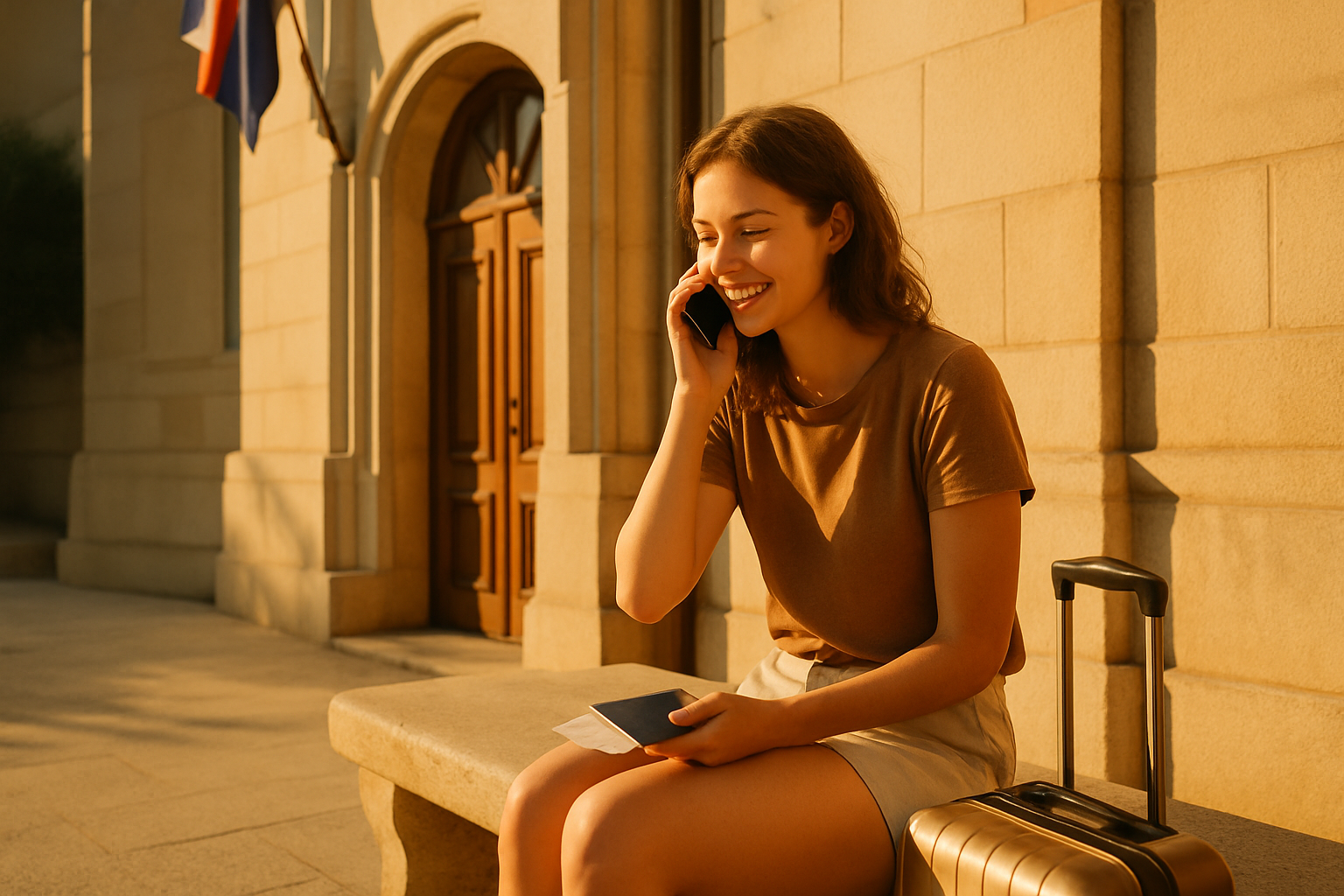
If you lose your passport while travelling, act immediately: report the loss to local police, contact your embassy or consulate and arrange an emergency travel document or replacement passport. Do those things in that order and you will remove the slowest blockers to getting home or continuing your trip.
First things to do in the first hour
Keep calm. Panic leads to rushed decisions that make replacing a passport harder. Ask yourself where you last used it - at border control, a hotel reception, a cafe - and turn back to those places straight away. If you are in a secure building such as an airport, report the loss to airport police or customer service; they often hold found items and may be able to stop you passing through security without delay.
If the passport is simply misplaced rather than taken, the quickest fix is retrieval. If you suspect theft, your first physical step must be a police report. A official police record is the single most requested document by embassies when issuing an emergency travel document, and airlines often ask to see it too.
Who to contact and in what order
The order matters because each contact unlocks different help. Make these calls or visits as soon as you have a safe place to speak and a phone signal.
- Local police. Report the loss or theft and get a written report or incident number. Ask for a copy in English if possible and keep the contact details of the officer.
- Your embassy or nearest consulate. They are the authority that issues emergency travel documents and replacement passports to citizens abroad.
- Your airline or tour operator. Tell them you have lost travel documents; they can advise whether an emergency document will be accepted for your flight and help rebook if needed.
- Your accommodation host or local contact. They can help with translations, photocopies and locating a photo shop or police station.
- Your bank or card providers. If your passport was lost with other valuables, cancel or monitor cards promptly to limit fraud.
Finding your embassy: use your country's government travel-advice website or the embassy locator on the foreign ministry site. If you cannot find the embassy number, call the country's international switchboard or the local emergency number and ask for the nearest consular assistance line.
Emergency travel documents explained
Embassies issue two kinds of papers in most cases. One is an emergency travel document, sometimes called an emergency passport or temporary travel document: a short-term certificate that allows you to travel home or to a specific country. The other option is a full replacement passport, which is identical in function to your original but takes longer to produce. Which you get depends on your travel plans and the issuing authority's rules.
Emergency travel documents are useful if you need to travel quickly. They are normally valid for a single journey or a short period, and some countries will not accept them for entry if a visa is needed. A replacement passport is preferable if you have time to wait and need to travel on routes that require visas or onward proof of identity.
Decide by matching the document to your itinerary. If you must fly home within 48 hours, an emergency travel document is usually the practical choice. If you have a week in one place, and your destination or any transit countries require a full passport, apply for a replacement instead.
What you will need to get an emergency document
Consular rules vary, but these items are almost always requested. Bring them if you can, and if you cannot, explain why to the consular officer - there are often alternatives.
- Police report or incident number proving you reported the loss or theft.
- Proof of citizenship: a photocopy or photo of your passport, a national ID card, a birth certificate or a citizenship certificate. If you have none of these, a scanned copy stored in an email or cloud account is often accepted as evidence while further checks are made.
- Proof of identity: another ID such as a driving licence, a photocopy of the lost passport, or government correspondence addressed to you.
- Proof of onward travel: an airline booking, train ticket or travel itinerary showing when you need to travel.
- Passport-sized photos meeting the issuing country's specification. Many consulates list the exact size and background requirements; if you cannot meet them, ask whether they will accept digital photos taken at the consulate or a local photo service.
- Payment for consular fees. Embassies publish fee information on their websites; payment methods vary and may include card, local currency cash or credit card. Bring extra in case the consulate accepts only one method.
Step-by-step: the usual consular visit
- Call the embassy or consulate to make an appointment where possible. Emergency slots exist, but lines can be long without one.
- Arrive with originals and copies of anything you can find: ID, travel plans, the police report and passport photos.
- Be ready to provide biographical details and recent travel history. Consular staff will need to confirm your identity and citizenship.
- Complete the application forms and pay the fee. Ask for a receipt and for the expected timescale to collect the document.
- Collect the emergency document when advised. Check the document carefully before you leave the consulate to ensure names, dates and travel restrictions are correct.
Worked example: mapping the steps to a real itinerary
Say you are a first-time traveller who loses your passport in a Madrid cafe on the morning of a flight from Madrid to Manchester with a short connection. You notice the passport gone just after breakfast and you have four hours before your scheduled departure.
First, retrace your steps to the cafe and any transport you used; if the passport was handed in you'll recover it in minutes. If not, go to the nearest police station and ask for an immediate report. With the police report in hand, call your country's embassy in Madrid. Explain you need an emergency travel document because your flight is within hours. They will tell you whether they can issue an emergency document that day.
Next, call the airline. Explain the loss and that you are obtaining an emergency travel document. Ask whether they will accept an emergency document and police report to board. If the airline requires a full passport, you must postpone the flight and ask about rebooking fees or waivers; every carrier handles this differently but airlines often help if you can demonstrate you are taking active steps.
If the consulate can issue your emergency document the same day, arrange immediate transport there, take the police report, a photo, proof of travel and any ID you have, and be prepared to pay the consular fee. If the consulate cannot produce a document quickly, you will need to rebook and prepare for a stay while a replacement passport is processed.
What to do about visas and entry stamps
If the lost passport carried visas or entry stamps, tell the consulate immediately. Some embassies can annotate a replacement passport with visa information, or issue a certificate confirming the visas were valid before the loss. Where a visa cannot be transferred or reissued rapidly, you will need to contact the embassy of the country that issued the visa for advice on replacement or re-entry.
Transit rules matter. An emergency travel document may not be acceptable to a transit country that requires a visa in advance. Always check transit and entry requirements for both the country you are leaving and any countries you will pass through. Your airline can tell you whether it will accept the emergency document for embarkation, but immigration officials at the destination and any transit point make the final decision.
How long replacement takes and how to minimise disruption
Processing times vary by embassy, by country and by how busy consular staff are. Emergency travel documents can sometimes be issued the same day, or they can take a few days. Full replacement passports usually take longer. You should assume replacement will not be instant and plan accordingly.
Do the practical things that cut time: have digital copies of your documents ready, know where to get passport photos near your location, and get to the consulate early. If you can, email copies of your police report and ID to the consulate before arriving. That gives staff time to check details and sometimes speeds up the in-person appointment.
Tell your employer, family and any accommodation hosts what is happening. If the passport loss forces a change of plans, notify any providers immediately to avoid no-show penalties and to ask about refunds or credits. If you have travel insurance, now is the time to contact them. They can advise on cover for legal documents, emergency cash advances or rebooking costs and can often point you to local assistance; for full information about policies and cover, see an appropriate anchor phrase.
Practical tips to keep life moving while you wait
Keep copies of everything you hand to authorities and the embassy. Carry the police report and any consular receipts when you travel around locally while waiting for documents. Border officials accept copies together with the original emergency receipt far more readily than no documents at all.
Consider these practical steps now so they are done when you need them.
- Store scans or photos of your passport and other ID on encrypted cloud storage and in an email draft to yourself before you travel. A paper photocopy tucked into your luggage is also useful and often accepted as proof of identity.
- Get a simple travel wallet or document organiser. Keep copies, receipts and contact numbers in one place so you can present them quickly.
- Buy local currency at the embassy or from a bank if you need to pay consular fees in cash. Some posts do accept cards but not all.
- Use a camera phone to photograph the police report, the front of your lost passport if you still have a copy, and the consular appointment confirmation. These images speed up later communications.
If your passport was stolen: extra precautions
Theft adds another layer. Beyond the police report and consular visit, contact your passport issuing authority at home to alert them to the theft. Many countries allow you to report a lost or stolen passport online or by phone; doing so prevents the document being used fraudulently and can speed replacement.
Change passwords for accounts that might be vulnerable if IDs were taken, such as email, banking and government accounts. Keep an eye on your bank statements for unusual transactions and consider a fraud alert with your bank if cards were taken with the passport. If you suspect identity theft, file a report with the issuing country's identity-fraud service where one exists.
Costs, payment and what can go wrong
Consular fees vary greatly by country and document type. Embassies publish current fees and acceptable payment methods on their websites, so check before you travel to the embassy. If you cannot pay the required fee immediately, explain the situation; consulates sometimes accept payment by card over the phone or allow a short delay, but do not rely on that.
Common problems: the embassy is closed or too busy; you lack a passport photo that meets the specification; a transit country refuses the emergency document. When any of these happen, your options are to reschedule travel, ask the airline for a compassionate rebooking or embargo fee, or, if possible, travel to the nearest larger consulate or embassy that can help more quickly.
How to avoid this happening again
Prevention is the cheapest fix. Before you travel, photograph your passport, store a copy in email and in cloud storage, and leave a copy with someone you trust at home. Carry the passport in a secure travel wallet and keep it on your person, not in a checked bag. Use hotel safes for spares and never carry the passport and your wallet in the same pocket in crowded areas.
Consider small practical investments: a set of passport photo printouts, a slim photocopy of ID in your luggage and a separate card-sized photocopy in your wallet. These small redundancies are the very things that make replacements faster and reduce stress when something goes wrong.
Frequently asked questions
Can I fly home without a passport?
Possibly, but not guaranteed. Some airlines will accept an emergency travel document and a police report for international travel; others insist on a full passport. Always check with the airline first and take proof that you have reported the loss and that the embassy is processing a document.
How long does an emergency travel document last?
It usually covers a single journey or a short period and is not a long-term replacement. The precise validity period is set by the issuing authority and will be printed on the document; check with the consulate for the exact conditions and any restrictions.
Will my visa be replaced if it was in the lost passport?
Not automatically. Visas issued in the lost passport may need to be reissued or referenced on your new passport. Your embassy can advise and sometimes liaise with the issuing country's diplomatic mission to replace a visa, but this can take time and sometimes requires application to the visa-issuing authority.
What if I lose my passport on a cruise or remote area?
Report the loss to the ship's purser or the remote base as soon as possible; cruise operators have procedures for contacting embassies and arranging emergency documents at the next port. In remote areas, you may need to travel to the nearest city with a consular presence, so allow extra time in your plans.
Can someone else collect my emergency document for me?
Some consulates allow an authorised representative to collect documents, but they usually require written authorisation, copies of ID for both parties and strict identity checks. Check the consulate's policy before you appoint someone to collect on your behalf to avoid delays.