Short answer
If you want the lightest kit, a hollow-fibre squeeze or straw-style filter wins for a solo hiker. For faster throughput on group trips, a gravity filter is the least work. If viruses are a concern, add a chemical treatment or a UV pen to any mechanical filter. Pick the system that matches your group size, typical water clarity and your willingness to maintain it in the field.
How water treatment actually protects you
There are four ways a backpacking system makes water safe: mechanical filtration (removes particulates, protozoa and bacteria), activated-carbon adsorption (removes tastes, odours and some chemicals), chemical disinfection (kills bacteria, protozoa and viruses given enough contact time) and ultraviolet light (inactivates bacteria, protozoa and viruses but needs clear water and power). Each method has limits; none is perfect by itself in every situation.
Mechanical filters are rated by pore size in microns. Filters around 0.1 to 0.2 micron will reliably stop most bacteria and protozoa. Viruses are much smaller and generally pass through mechanical filters, so if you expect viral contamination you need chemical treatment or UV. Activated-carbon elements help with agricultural runoff, petrol smells and chlorine taste but do not disinfect on their own. Chemical treatments work against viruses, but they require correct dose and contact time, and they alter taste.
Filter types and where they belong
Choosing a type is the first decision. Each class has clear strengths and clear weaknesses.
Squeeze filters
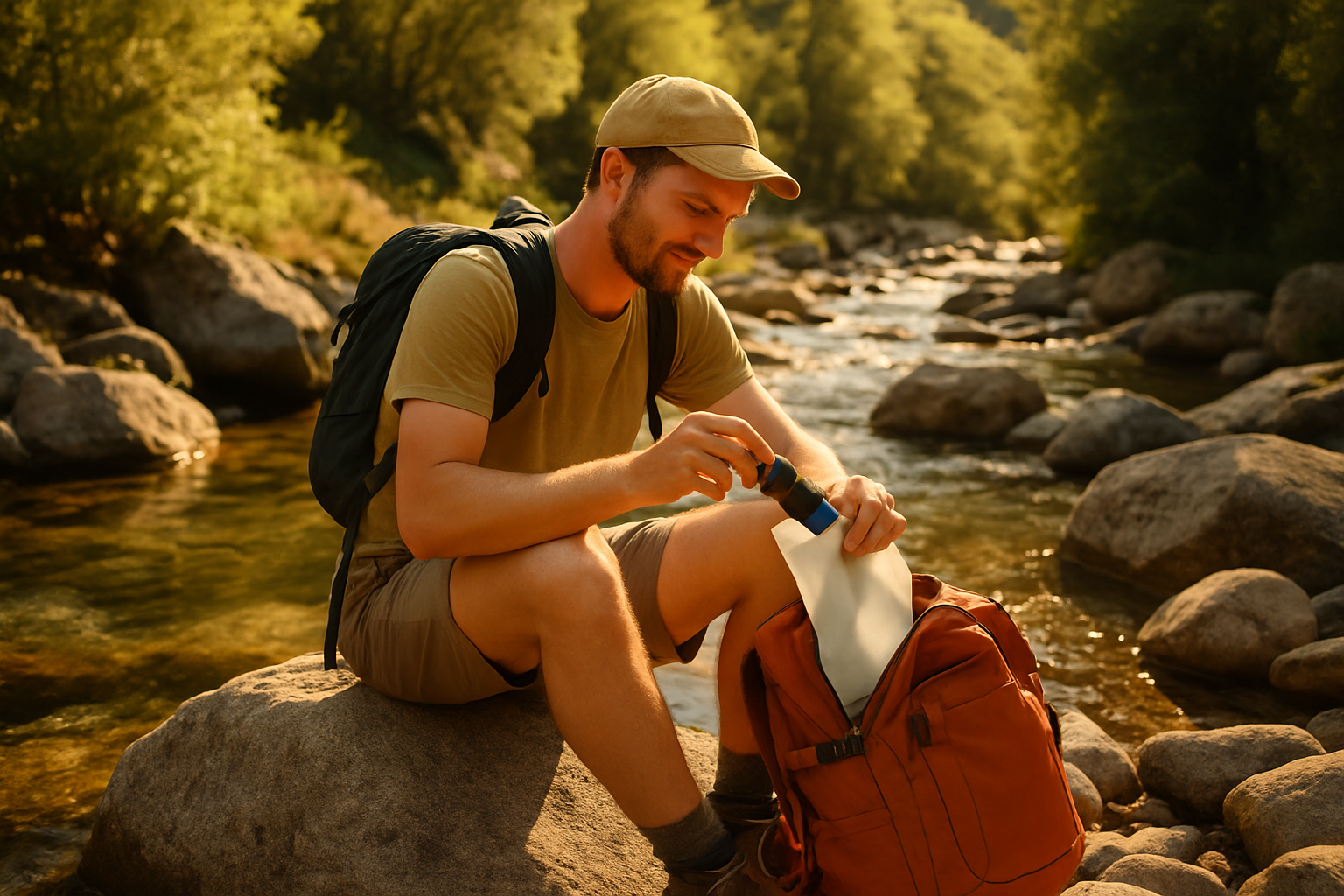
Light and simple: you fill a soft reservoir, squeeze through a hollow-fibre cartridge and drink or top up a bottle. They are very compact, low-maintenance in good water and fast enough for one to two people. They clog on turbid water and the pump-free design means fewer moving parts to fail. Their mechanical element usually removes protozoa and bacteria but not viruses, and many include an activated-carbon stage for taste.
Straw-style filters
Ultralight and immediate: you drink directly from the source or from a small bottle. Ideal for day hikes or when weight is the priority. They are vulnerable to freezing, give no storage option, and are a poor choice if you want to treat water for a group or to carry treated water.
Pumps
Pumps force water through a ceramic or hollow-fibre element. They work with turbid water better than many small filters because you can apply pressure to get flow through clogged media. Pumps are heavier and require occasional maintenance, such as seal and o-ring replacement. They reliably remove protozoa and bacteria; some models add carbon for taste. Pumps are a sensible middle ground if you need consistent flow from variable sources.
Gravity filters
The easiest option for groups. You hang a dirty bag, let water flow down through a larger filter into a clean bag and go off to pitch a tent. Flow rates are generally high and you do no pumping, but the systems are bulkier when packed and need space to hang. They are excellent on multi-day trips with a camp and multiple people because one person handles the setup and everyone fills bottles while the filter runs.
UV pens
UV devices inactivate viruses, bacteria and protozoa quickly; they are small and fast. Their weakness is the need for clear water and batteries. Turbid or coloured water shields microbes from UV, so you will often pair a UV pen with a pre-filter or use it after a mechanical filter. Electronics can fail, so carry spare batteries and know the pen's runtime at the temperature you expect.
Chemical treatments
Tablets or drops based on chlorine dioxide or iodine are light and compact and effective against viruses. They are slow in cold water and change taste. Many hikers carry chemicals as a backup or to handle viruses where mechanical filtration alone is insufficient. Follow manufacturer contact times for cold water and high-altitude situations.
Ranking filters for backpacking by the criteria that matter
Below I rank the types you just read about against four practical axes: weight, flow rate, field maintenance, and contaminant removal. This isn't an academic scorecard. It's the quick comparison you need when packing for seven days in the hills.
Weight - lightest to heaviest: straw-style filters, squeeze filters, UV pen, pump filters, gravity filters. Weight matters most for long solo trips; a few hundred grams saved every day adds up.
Flow rate - fastest to slowest: gravity filters, pumps, squeeze filters, UV pens (once you factor in pre-filtering), straw-style. Faster is not always better; a high flow rate matters when you are refilling multiple bottles for a group.
Field maintenance - lowest to highest: straw-style and squeeze filters (few moving parts), gravity filters, UV pens (battery and lamp care), pumps (o-rings, seals, occasional disassembly). If you dislike fiddling with tiny parts, avoid pumps unless you can carry spares and know how to service them.
What they remove - best for protozoa and bacteria: mechanical filters across the board. Best for viruses: chemical treatments or UV. Best for tastes and some chemicals: systems with activated-carbon cartridges. No single filter removes everything; the best choice is often a combination tuned to known risks.
How to choose for your specific multi-day trip
Match the filter to three simple trip facts: where you will get water, how many people you need to serve, and how willing you are to maintain equipment on the trail.
Water source. If you will rely on clear, flowing mountain streams, a mechanical filter alone is usually enough. If you expect stagnant water, lowland rivers near agriculture or human settlements, assume viral or chemical contamination is possible and use a secondary treatment such as chemicals, UV or carbon.
Group size. Solo hikers and lightweight pairs often prefer squeeze or straw filters. Groups of three or more benefit from gravity systems because one person can run the filter while others relax, cook and fill bottles. Pump filters are a middle option for two people who expect variable water clarity.
Season and temperature. In freezing conditions mechanical filters with water inside can be damaged when frozen. Carry filters inside your sleeping bag at night, use insulating wraps and drain them before a cold night. UV pens suffer battery life loss in cold, so keep spares warm.
Reliability vs weight. If you are several days from help, favour redundancy over minimal grams. A small squeeze filter plus a pack of chemical tablets covers most contingencies without doubling weight dramatically.
What goes wrong and how to fix it
These are the real failures hikers encounter and how to handle them.
Clogging
Turbid water is the usual culprit. Pre-filter visibly dirty water through a bandana or coffee filter. Backflush hollow-fibre and pump filters as soon as flow slows. For pumps, disassemble and rinse the inlet screen. If you cannot clear a cartridge, switch to chemical treatment for the remainder of the trip.
Freezing
Frozen water expands and splits ceramic elements and o-rings. Never store a wet filter in sub-zero temperatures overnight. Keep the filter inside your pack near your body heat or drain and stow in an insulated sleeve. If an O-ring freezes and cracks, a replacement is the fix; carry spares for pumps.
Broken seals, lost parts or worn cartridges
Always carry a tiny repair kit: a spare o-ring or two, a short length of tubing, and a replacement valve if your system uses one. Many filters have model-specific spares but you can improvise short-term repairs with tape and a clean fingered plastic sleeve. Plan to replace a worn cartridge when you are home; in the field, switch to chemical treatment if replacement isn't available.
Dead batteries on UV pens
Keep extra batteries and know how to check the pen's runtime. If batteries die, treat water with chemicals or boil it until you can replace power.
Practical checklist: what to pack for reliable treated water
- A primary filter matched to your trip type (squeeze, gravity, pump or UV pen).
- A lightweight secondary method: chemical tablets or a small UV pen, depending on the primary.
- One-litre soft reservoirs or bottles to collect water; spare bottle for treated water storage.
- Repair kit: a couple of spare o-rings, a short length of clear tubing, a valve or mouthpiece spare if your system has one, and waterproof tape.
- Pre-filter cloth (bandana or coffee filter) for turbid sources.
- Insulating sleeve or a soft pouch to keep the filter from freezing overnight.
Worked example you can map onto your own trip
Say you are two people on a seven-day ridge walk in summer, with camps each night beside streams of varying clarity. You want minimal fuss at camp but reliable treated water for cooking, coffee and two litres per person to carry during the day. Here is a practical plan.
Primary system: a squeeze-style hollow-fibre filter. It is light, fast for two people and low on field maintenance. Pack a spare soft reservoir to fill from shallow bank access. Secondary system: chlorine dioxide tablets in case the filter clogs or you meet unusually dirty, stagnant water where viruses might be a risk. Also carry a bandana for pre-filtering milkshake-like water.
At camp, pre-filter any cloudy water through the bandana into the dirty bag, attach the squeeze filter and fill a 2-litre clean reservoir for the next day. Backflush the filter each evening according to the manufacturer directions, or at least until you restore decent flow. If the filter becomes stubbornly slow, switch to chemical treatment until you can reach a clearer supply or complete the trip.
That approach keeps weight down, gives you a clear maintenance routine and leaves redundancy for the real-world problems that happen: heavy rain that stirs silt, or a cracked o-ring. If you expected to be in a lowland area with farms and possible sewage contamination, swap the chemical tablets for a UV pen held warm in your sleep system so you can treat for viruses as well.
Field maintenance and long-term care
Nothing ruins a filter faster than neglect. Rinse and backflush after each day of heavy use, and allow the filter to drain and dry completely before long-term storage. Replace activated-carbon cartridges after the number of litres recommended by the manufacturer; carbon gets saturated and then does not remove tastes or chemicals effectively.
Ship spare parts home in a labelled plastic bag when you return. If a filter smells or has a visible film after storage, replace the cartridge or follow manufacturer disinfection instructions before next use. Keep o-rings lubricated with a silicone grease suitable for potable-water gear; do not use cooking oils, which degrade rubber.
Buying tips and recommendations
When you shop, check these specifications rather than marketing copy. Look for the micron rating, stated flow rate (litres per minute), whether the system contains activated carbon, the field maintenance routine, and what the manufacturer recommends for cold-weather use. Don't buy a unit that requires proprietary spare cartridges you cannot get where you travel.
If you need a single recommendation rule: for most multi-day backpackers a hollow-fibre squeeze filter plus a small pack of chemical tablets gives the best balance of weight, speed and redundancy. If you travel with three to five people and you camp at the same site, a gravity filter saves time and effort at camp despite the bulk. For trips where viruses are a realistic risk, add a UV pen or chemicals to whatever mechanical system you choose.
Finally, if you are travelling to remote places where rescue or evacuation would be costly, check your trip insurance details and emergency cover before you go. You can start here with an appropriate anchor phrase.
Frequently asked questions
Do I need to treat water from mountain streams?
Generally yes. Even clear mountain streams can carry Giardia or Campylobacter from wildlife or upstream human use. Mechanical filtration removes protozoa and bacteria; add chemical or UV treatment only if virus risk or specific contamination is likely.
Can I rely on chemical tablets alone for a week in the hills?
Chemical tablets are effective against bacteria and viruses when used correctly, but they do not remove sediment or improve taste. For turbid water you should pre-filter, and many hikers prefer mechanical filtration for convenience and immediate-use water.
Will a UV pen work after a rainy day when water is murky?
UV requires clear water to reach microbes. On murky days you need a mechanical pre-filter, such as a bandana or a small sediment filter, or switch to chemicals until the water clears.
How often do filter cartridges need replacing?
That depends on the filter type, the water quality and the manufacturer. Activated-carbon stages saturate faster than mechanical elements. Check the product guidance for litres of rated life and watch for drops in flow as your cue to replace or service the cartridge.
What spare parts should I carry?
Carry the small things that stop a system: a couple of o-rings, a length of clear tubing, a spare valve or mouthpiece if your setup uses them, a bandana for pre-filtering and the appropriate batteries for a UV pen. These items solve most common failures on trail.