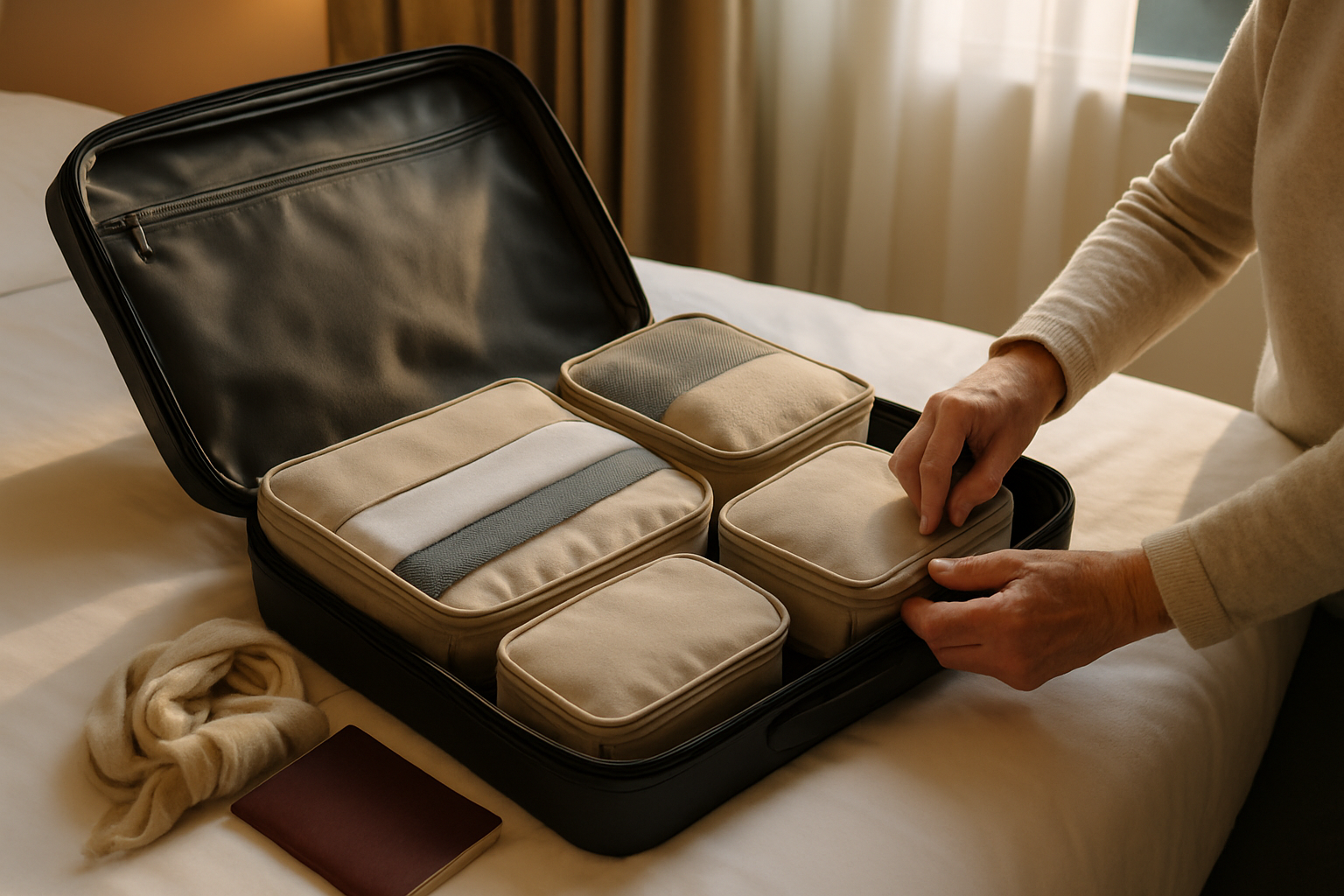
Short answer: choose a set that matches your bag's internal measurements, mixes at least one thin shirt folder with two to three shallow cubes, and uses a light, tear-resistant fabric with mesh panels for visibility. Compression cubes buy volume but can crease delicate clothing; non-compressing cubes keep things organised and easier to rearrange at short notice.
How to think about size rather than brand
When carriers enforce strict size or weight limits, the only reliable way to pack smarter is to fit cubes to the space you actually have inside your bag. That means measuring the internal dimensions of your carry-on and planning cubes around those measurements, not choosing cubes because they look roomy in a photo.
Start by measuring the interior length, width and depth of your suitcase or backpack at its deepest point. Then visualise the space as layers: a base layer for heavier items, a middle layer for folded shirts and trousers, and a top layer for small items and things you need on arrival. Cubes should fill those layers without leaving large air pockets; empty space gets wasted, which is exactly what you are trying to avoid.
Worked example: say your bag's internal space is roughly 50 cm long, 33 cm wide and 20 cm deep. A sensible cube configuration for a 3 to 5 day trip is one flat shirt-folder about 50 x 30 x 3 cm, two medium cubes around 30 x 20 x 8 cm for trousers and sweaters, and a small cube or pouch for underwear, chargers and toiletries. That arrangement keeps items visible, balances the load and makes it quicker to reshuffle at security or when your plans change. Adjust the counts and depths to match your bag.
Compression cubes or organisation cubes: which wins?
Compression cubes reduce the depth of soft items after you zip them closed, either by an extra zipper that flattens the cube or by strap systems that cinch the fabric. Organisation cubes simply contain and separate items without trying to shrink them. Both have their place.
Pick compression cubes when you need to squeeze bulk down - for example, packing a sweater into a busier weekender or fitting a coat into an otherwise full bag. Compression works best with bulky knitwear, fleece and down that compresses without creasing. Expect more creasing on shirts and tailored items.
Organisation cubes are the better general-purpose option for strict carry-on travel. They keep outfits together, let you see what you packed through a mesh panel, and make it simple to swap individual cubes between bags if you have a connection or an overnight stop. If you rarely need the last inch of space, organisation cubes give more flexibility and faster access at security.
Fabric weight and build: the trade-offs that matter
Lightweight fabrics save grams, which matters when airlines have tight weight limits. But ultralight fabrics pay that saving by being more fragile. What you want for a carry-on is a fabric that balances low weight with reinforced stress points and a robust zipper.
Look for the following in the construction, not a specific label: taped seams at the corners where load concentrates; a double-stitch on handles; high-quality coil zips rather than cheap metal teeth that can misalign; and a mesh panel for every cube so you can see contents without opening everything. If a cube includes a water-resistant coating or a TPU lining, it will help contain leaks from toiletries. That lining adds a little weight and stiffness, which is worth it if you carry liquids often.
Another practical detail is the handle placement. A single handle on the short side is fine for pulling a cube out of a suitcase, but if you'll be lifting a full cube often, a handle on two opposite sides reduces strain on the zipper and seams.
Organisation features that actually save time
Not every pocket is useful. Focus on features that solve real, repeated annoyances.
- Mesh panels let you identify contents at a glance. This saves you from opening several cubes during security or when you need one specific item.
- Internal dividers are helpful if you want a single cube to carry two distinct categories, such as underwear and socks, or charging cables and adapters.
- Removable laundry bag keeps dirty items separate on the return leg and makes a quick sort at the hotel. The laundry bag can double as a daypack organiser.
- Zippered external pocket for small items you'll want without unpacking the whole case. Keep a charging cable or a spare face mask here.
- Compression strap loops let you use third-party straps to compress a whole stack of cubes when you need a tighter fit.
If a cube set has a shirt-folder that lies flat and holds shirts in a tidy stack, you will reach your destination with fewer creases. That one element often beats an extra medium cube when space is tight.
How to pack carry-on efficient and stay flexible
Packing is not just about getting everything in. It's about how easily you can adapt when plans change: gate-checks, an extra overnight, or a small delay that makes you change outfits. Follow this sequence when packing a strict carry-on; it assumes you are using a combination of a shirt-folder, two medium cubes and a small accessories pouch.
- Lay out everything you intend to take. Remove anything you can buy or borrow at your destination.
- Place heavier items that you won't need in transit into the base of the largest cube - trousers, one pair of shoes if soft, or a sweater.
- Use the shirt-folder for shirts and lighter trousers. Fold each shirt once, stack them facing the same way and slide the stack into the folder to keep them flat.
- Pack underwear, socks and chargers into the small cube. Put toiletries in a sealed pouch and slot it upright at the top of a medium cube for quick access.
- Arrange cubes in the bag as layers: heavy cube on the bottom, medium cubes in the middle, shirt-folder flat at the top or along one side depending on the bag shape.
- Keep a single small pouch in your handbag or day bag with essentials - passport, phone charger, prescription medicine, and one change of underwear in case your bag is delayed.
This order minimises movement inside the bag and keeps frequently needed items accessible. If you have a connection and the risk of your bag being gate-checked, grab the small essentials pouch out of the main bag before you hand it over.
What goes wrong, and how to fix it fast
Zippers jam, seams split, and a cube full of toiletries can make a small disaster of your clothes. Most common problems have quick fixes if you prepare for them.
Zipper failure
If a zipper sticks, work a pencil lead or a bar of soap gently along the teeth to lubricate it. If a slider detaches, use a safety pin to hold the two sides together temporarily and finish your trip. For a broken zipper pull, tie a shoelace or loop of cord through the slider so you can still open and close the cube.
Seam or corner splitting
Stitching failures usually start where you lift a full cube by a single short handle. If you see fraying, reinforce it with a small patch of strong tape until you can sew it properly. At the airport, place a fragile cube inside another cube or a soft bag to reduce strain.
Liquid leak
Always put toiletries and liquids in a sealed, waterproof pouch before they go in a cube. If a leak happens, remove affected cubes and rinse the clothing in the hotel sink as soon as possible. A quick hand wash and air-drying often removes stains that would otherwise set.
Gate-check or lost bag
If you're forced to gate-check a bag, take out your essentials pouch and any irreplaceable items. Make a habit of carrying a small set of vital items on your person. For reimbursement and claims guidance if your bag is lost or delayed, check your policy wording and, where applicable, consider an appropriate anchor phrase for more on cover for delayed luggage.
The set I'd recommend for strict carry-on travel
One versatile configuration covers most short trips without getting fiddly. Buy a set that includes a shirt-folder, two medium cubes and a small cube or accessories pouch. The shirt-folder protects collars and reduces creasing. The two medium cubes give you two outfit groups and a separate space for bulkier items. The small cube keeps underwear, socks and electronics tidy.
Choose fabrics with reinforced seams and a mesh panel on each cube. If you expect rain or carry liquid-heavy toiletries, pick a set with at least one water-resistant lined cube. Aim for simplicity: three or four pieces that can be combined or used independently when you transfer between bags.
Buying, caring for and replacing cubes
When buying, test zips and handles in person if you can. Check the return policy: you want a set you can try in your own bag and return if the shapes don't fit. Warranties vary. If a seller offers repairs, that is a sign the product is built to last.
For care, empty cubes and air them after trips. Most fabric cubes tolerate a gentle hand wash; follow the manufacturer's cleaning advice. Avoid tumble drying unless the instructions specifically allow it. If a cube gets a small tear, patch it from the inside with strong fabric tape rather than sewing a heavy external patch that will catch in your suitcase.
How to choose if you travel with specific needs
If you travel with a suit or need to arrive crease-free, favour a shirt-folder and use it as your main garment carrier. For adventure travel where wet kit is likely, trade a mesh cube for a fully waterproof one. If you carry cameras or fragile equipment, avoid compressing those items in cubes and instead use a dedicated padded insert that fits your carry-on.
Frequent flyers who rotate between small carry-ons and backpacks should favour slim, flexible cubes that slide into different shapes. If you fly infrequently and want the most space possible for a single trip, choose stronger compression cubes and accept some extra creasing.
Frequently asked questions
How many packing cubes do I need for a 4-day trip?
For most people, three to four cubes cover a 4-day trip: a shirt-folder, two medium cubes and a small accessories pouch. That gives you separate spaces for outfits, bulk items and small essentials while keeping everything easy to reach.
Will compression cubes make my shirts crease more?
Yes, compression increases creasing on shirts and other tailored items because it flattens fabrics unevenly. Use compression for knitwear and volume items and a shirt-folder for anything you want to keep presentable.
Can I use packing cubes in a backpack as well as a suitcase?
Absolutely. Flexible cubes are ideal for moving between a suitcase and a backpack. Choose cubes with soft sides rather than rigid frames so they conform to different bag shapes and can be layered efficiently.
Are light fabrics worth the risk for carry-on weight limits?
Light fabrics are worth it if you are consistently close to a weight limit. Balance lightness with reinforcements at stress points and good zips. If your travel is rough or includes heavy items, a slightly heavier but stronger fabric will save you hassle.
What should I do if a cube rips mid-trip?
Patch the tear with strong fabric tape and move fragile items into another cube to avoid further damage. If the tear is at a handle or zip, redistribute the load to protect the damaged area and arrange a permanent repair when you return.