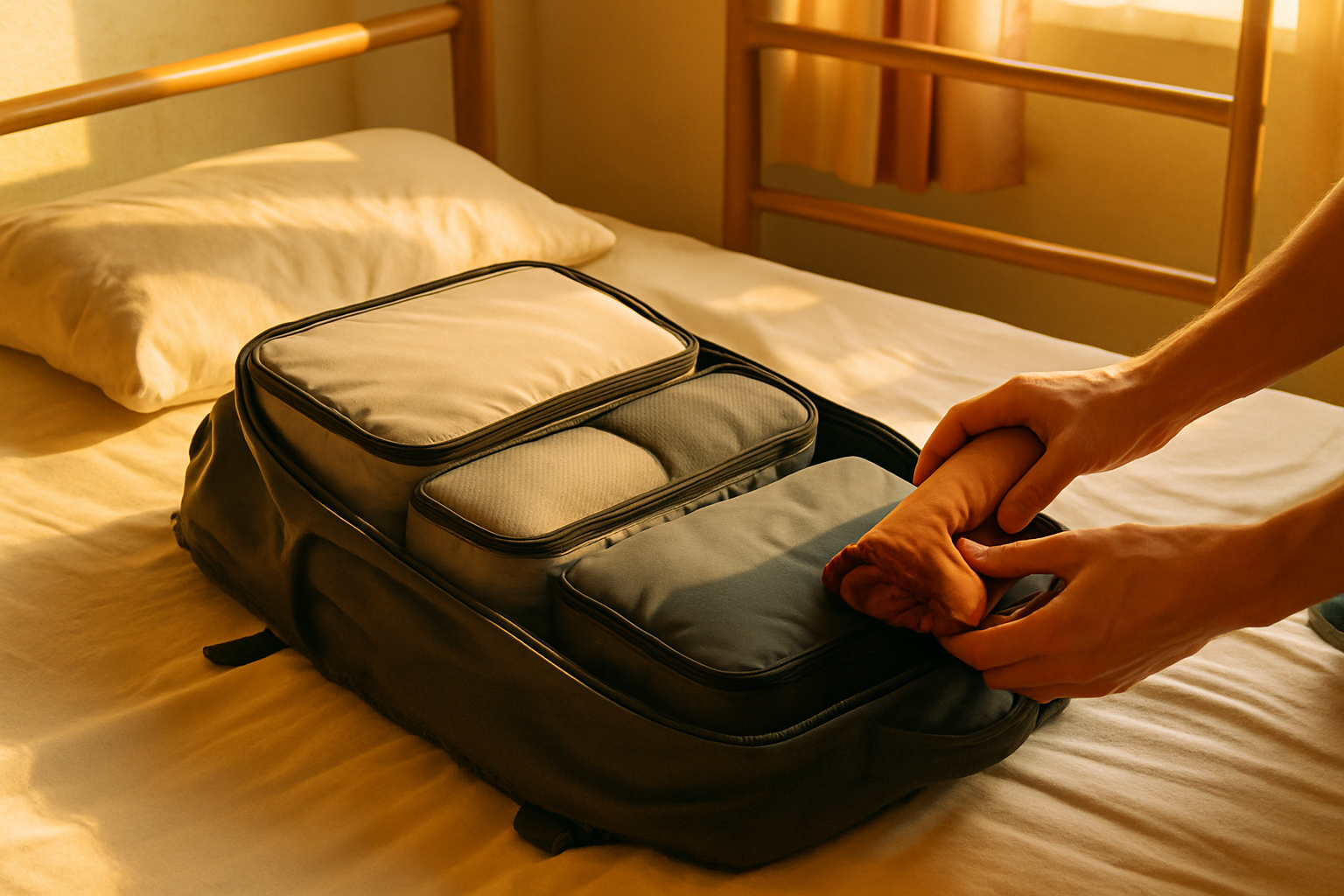
For a backpacker travelling carry-on only, choose a small set of durable compression cubes with mesh tops and one flat, quick-access cube that fits the main compartment. Measure your bag first, prioritise a cube that compresses bulky layers, a see-through organiser for security, and lightweight materials that will stand up to repeated stuffing.
Why packing cubes matter when you travel with just one bag
You already travel light. Packing cubes do more than tidy a bag: they let you compress bulky items, protect clean clothing from sweaty trainers or wet kit, and make the difference between a frantic ten-minute search and finding what you need in thirty seconds.
For a backpacker, every gram and centimetre counts. The right cubes convert wasted dead space into usable volume and keep frequently used items on top so you need not dismantle the whole pack at security, hostels or a guesthouse doorway.
What to look for: the decision criteria that actually matter
This is the practical checklist you should use while shopping. Ignore marketing language. If a bag ticks most of these boxes it will serve you well on short trips, multi-stop trips and when you need to move quickly.
- Measure your bag. The most common reason a cube fails is size mismatch. Measure the internal dimensions of your backpack (length, width, depth) and visualise stacking. A cube that looks small online may block the main compartment opening if it is too tall.
- Compression method. There are two main kinds: external straps that squeeze the cube from the outside, and internal compression zips that reduce the cube's height by pulling fabric in. Internal compression tends to produce a more compact, tidy bundle; external straps are lighter and simpler.
- Material weight versus durability. Ultralight siliconised nylon or ripstop fabrics save weight but will scuff sooner. If you live out of your pack for months, choose a heavier denier ripstop that resists abrasion. Ask yourself how often you will seat your pack on rough floors, bed frames and train platforms.
- Mesh panels. A full or partial mesh top gives two advantages: you can see what's inside at a glance and the cube breathes, which helps with damp clothing and odours.
- Zips and seams. Look for two-way zips and reinforced stitching on corners. Zippers are a common failure point; double-stitched seams and bar-tacked stress points last longer with heavy use.
- Water resistance. Most cubes are water-resistant rather than fully waterproof. If you expect downpours or river crossings, use a separate waterproof dry bag for electronics and documents and reserve the cubes for clothing.
- Shape. Flat, rectangular cubes stack better in backpacks than thick, boxy bags. Slim, flat cubes are ideal for shirts and underwear. Deep, short cubes suit trousers and a jacket.
- Visibility for security. If airport security in a country routinely asks you to remove jackets and laptops, a cube that unzips and lays flat or a single transparent security cube makes those moments faster.
- Transferability. The best cubes fold flat and move easily between main pack and daypack. If you're likely to gate-check or swap bags, choose cubes that fit common daypack sizes so you can transfer essentials instantly.
My picks - what to buy, by need
Because you want choices that match how you travel, these are category picks defined by what they do rather than by brand names. When you look for a product, match the description to the specification sheet on the retailer page.
Best overall compression set for short trips
Look for a three-piece set with two compression cubes (one large, one medium) and a small accessory cube. The compression cubes should have an internal zip that reduces the pack height by about one third and a partial mesh top for visibility. Choose a weave that balances lightness with a ripstop grid or reinforced corners. This set is the most flexible: the large cube takes trousers and a mid-layer, the medium takes shirts or a down jacket, the small holds socks and underwear.
Who it's for: backpackers who do city hops and short hikes and want to squeeze a jacket and a couple of shirts into a 40-litre carry-on.
Best ultralight set for strict minimalists
Seek siliconised nylon with a single-layer weave, minimal stitching, and a mesh top. The set should include two flat cubes rather than boxy ones. Ultralight cubes will not compress bulky items as aggressively as structured compression bags, but they save grams and fold down small when empty.
Who it's for: solo travellers who prioritise weight over absolute volume saving, and who wash clothes frequently en route.
Best organisational set for security and tech
Pick a set that includes a flat, zip-open cube designed to lie flat on the X-ray belt, and one padded cube for cables, batteries and a compact laptop or tablet. The flat security cube should have quick-access zips and a see-through mesh so you can show contents without a full search.
Who it's for: travellers with frequent short-haul flights who need to remove and replace electronics quickly at security checkpoints.
Best heavy-duty set for long, rough travel
Choose a set made from heavier ripstop nylon, reinforced seams and stronger zips. Expect slightly more weight. Look for an extra small cube for wet/dry separation and a shoe bag with a tough base. These sets resist abrasion from hostel bunks, bus floors and being jammed into lockers.
Who it's for: backpackers on multi-month stints or those travelling through rough conditions where kit is handled frequently.
Best wet/dry separation and shoe solution
Even if you use a compression cube for clothes, always have a separate waterproofed dry bag or a coated cube for shoes and wet kit. The top should be a sealed roll-top or a coated zip. This prevents a leaking water bottle or sweaty trainers ruining the rest of the bag.
Who it's for: hikers, beach days, or anyone whose shoes and micro-rain will live in the same pack as clean shirts.
Best budget option that still performs
On a tight budget, look for sets that prioritise good zips and mesh tops over fancy fabrics. A simple three-piece set with reinforced stitching and two-way zips will beat a cheap single nylon pouch with a fragile zip. Buy the simplest set and upgrade a compression cube later if you need more squeezing power.
Who it's for: first-time backpackers or anyone replacing a worn-out single pouch without a large spend.
How to choose cube sizes and stack them in your backpack
Measure first. Lay your backpack on a table and push aside the frame if there is one. With a tape measure note the internal height from base to the top of the main opening, the internal width between side seams and the depth from the back panel to the front panel. Think in layers: most backpacks stack horizontally, not like a suitcase.
Match cube dimensions to the space you measured. If the bag internal height is short, avoid tall cubes that will force the lid to bulge. For a typical 35 to 45-litre backpack this layout often works well:
- Bottom: large compression cube with trousers and a down jacket; compress to flatten.
- Middle: medium cube with shirts and a thin fleece; rolls or folded shirts sit well here.
- Top: small cube with underwear, socks and a quick-change T-shirt; this cube sits nearest the main opening.
- External or side pocket: flat security cube with electronics, chargers, and a power bank.
If you plan day hikes, keep a small quick-transfer cube (shirt and underwear) that fits inside a daypack. That way you can leave the main backpack locked and carry just the essentials.
Packing step-by-step: the checklist every backpacker should follow
Follow this sequence the first time you use cubes. It makes later packing faster and keeps essentials accessible.
- Empty and measure your backpack internal dimensions.
- Lay out your clothing and decide what you will wash on the trip. Aim to wash every 3-4 days if possible.
- Assign items to cube sizes: trousers and jacket to the largest compression cube; shirts to medium or flat cubes depending on creasing; underwear and socks to a small cube.
- Pack electronics and documents in the flat security cube for quick access.
- Place wet/damp items in a waterproof cube or dry bag to isolate them.
- Load the largest cube first into the main compartment, compress, then add the medium cube and finally the small cube near the top.
- Weigh the packed bag on a scale and leave a margin for souvenirs or unexpected weight at departure.
Worked example: ten days, one backpack, a mix of city and day hikes
Say you have a 40-litre carry-on backpack and want to travel for ten days without access to laundry every day. Plan on light, quick-drying fabrics. Here is a realistic cube layout you can map to your own kit:
- Large compression cube (bottom): two pairs of trousers, one lightweight down jacket or synthetic insulated layer, one compact rain shell.
- Medium flat cube (middle): three shirts, one pair of shorts, one lightweight fleece or hoody depending on climate.
- Small cube (top): five pairs of underwear, four pairs of socks, sleepwear.
- Shoe/dry cube (separate): one pair of trainers and a roll-top waterproof bag with a couple of damp base layers.
- Flat security cube (external or top): small tablet, travel wallet, passport, chargers and a resealable liquids bag under the tablet for rapid removal.
Pack the large cube first and compress. Add the medium cube, then the small cube on top near the opening. Keep the security cube in the top pocket so you can slide it out for screening without uprooting the main stack. If the airline insists on gate-checking, pull the security cube and the small cube into a daypack so you still have sleepwear, underwear and documents immediately available.
How cubes speed up airport security and checkpoint queues
Your aim at security is to remove fewer items and show less bulk. A flat security cube that unzips and lies flat on the conveyor lets officers see contents without you spreading everything on the belt. If you need to remove electronics, place them in a dedicated padded compartment inside the security cube so the laptop or tablet can be lifted out quickly.
Liquids rules still apply: keep all liquids in a single clear resealable bag. Do not store that liquids bag inside a heavily compressed cube unless it is in the security cube and easily accessible. A spilt bottle inside a compression cube will soak everything beneath and waste time in a busy queue.
Durability, cleaning and repairs on the road
Treat cubes like clothing: wash them when they smell and air them daily if you use them for sweaty kit. Most nylon cubes tolerate a gentle machine wash on cold; check the manufacturer's care label. Drying in direct sun will kill mould faster than low heat in a dryer.
Small tears can be repaired with a patch of nylon tape on the inside and reinforced stitching across the stress point. Carry a needle and a length of strong thread if you will be on the road for months; a few minutes with a spare thread will keep a zip from tearing out completely on a bus platform.
What can go wrong and how to fix it quickly
A packing cube is not a magic box. Here are the common problems you'll face and simple fixes you can do on the road.
Gate-checked or forced to check your bag
If a carrier forces you to check your carry-on at the gate, you can avoid losing immediate essentials by preparing a small transfer cube that fits into a daypack. Pull out the transfer cube before handing over the checked bag, and keep documents, a spare shirt and underwear with you.
Weight limits bite at the gate
Compression makes your bag denser but not lighter. Always weigh your packed bag at home. If you are overweight at check-in, move non-essential cubes to a partner's bag if you travel together, or remove souvenirs and stash them in a daypack. Avoid last-minute digging through multiple cubes at the counter; a single top-access cube with essential items minimises stress.
Wet kit or a leaking bottle
A waterproof shoe or wet/dry cube will protect the rest of the bag. If a leak happens, pull the affected cube out, find a bin or wash point and wring or rinse the items immediately. Lay items on a dry towel and air them in the sun if possible to prevent odour build-up.
Cube zip breaks or a seam tears
If a zip pulls off the track, use a small safety pin to close the hole temporarily and seek a cobbler or repair service in town. For seam failures, hand-stitch a temporary repair. Carrying a tiny repair kit is worth the two minutes it will save when a seam gives way.
Electronics stolen or lost
Keep passports and electronics in the dedicated security cube and keep that cube close to the opening of your pack. If a device is stolen or lost, report it to local police and, where relevant, check whether your travel insurance covers gadget loss or theft; see an appropriate anchor phrase for more on what to check in your policy wording.
Final buying checklist before you click buy
- Have you measured your bag interior and compared cube dimensions?
- Does the set include a flat security-access cube?
- Is the compression method internal zip or external strap, and does that match the items you typically pack?
- Are zips two-way and are seams reinforced at stress points?
- Is there a separate wet/dry option, or do you plan to add a roll-top dry bag?
- Is the fabric a reasonable trade-off between weight and durability for your travel style?
Frequently asked questions
Do packing cubes actually save luggage space?
Yes, in the sense that they organise and compress soft items so you use the shape of the bag more efficiently. They do not reduce the weight of your contents. Compression cubes and vacuum-style bags can reduce volume noticeably, but they also make your bag denser, which can push you into airline weight limits if you do not check the scale first.
Can I put toiletries in a packing cube through security?
Liquids still need to follow local airport rules. Keep all liquids in a single clear resealable bag and place that bag in the security cube if you want everything together. Be prepared to remove the clear bag from the cube for inspection.
Which cube should hold my electronics during a flight?
Use the flat security cube for tablets and small laptops, especially if it has a padded compartment. That cube should be the one you can remove quickly at checkpoints and stow easily under the seat or in an overhead bin.
Are compression cubes worth the extra cost?
They are worth buying if you often carry a jacket or bulky items and need more usable space in a carry-on. If you travel very light and wash clothing often, a flatter, cheaper set may be sufficient.
Will packing cubes fit inside any carry-on backpack?
Not always. The key is matching cube dimensions to your bag's internal space. A slim cube that compresses horizontally fits more backpacks than a tall, boxy cube. Measure before you buy and visualise how cubes will stack in the main compartment.